Razor-backed kebbit
This copy was last processed on . The copied wiki revision is dated .
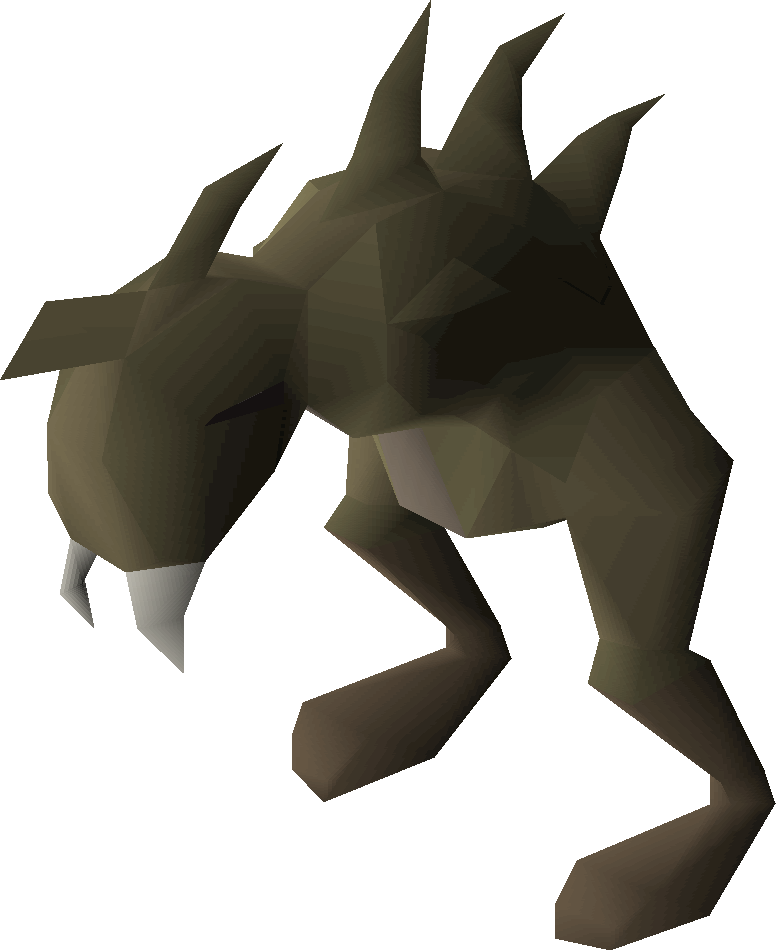
| Razor-backed kebbit | |||||||||||||||||||
|---|---|---|---|---|---|---|---|---|---|---|---|---|---|---|---|---|---|---|---|
| Released | 21 November 2006 (Update) | ||||||||||||||||||
| Combat level | 49 | ||||||||||||||||||
| Members | Yes | ||||||||||||||||||
| Location | Piscatoris hunter area | ||||||||||||||||||
| League region |  Kandarin✓ Kandarin✓ | ||||||||||||||||||
| Examine | It uses its tail to hunt and skewer fish. | ||||||||||||||||||
| Advanced data | |||||||||||||||||||
| NPC ID | No | ||||||||||||||||||
| Link | MOID | ||||||||||||||||||

When caught, they drop a long kebbit spike. A chisel can be used on the spikes to create 12 long kebbit bolts for each spike, requiring a Fletching level of 42.
Location
| Location | Levels | Members | Spawns | Map | League region |
|---|---|---|---|---|---|
| Piscatoris hunter area (AKQ) | N/A |  | 3 | Show map | Kandarin✓ |
Hunter info
| Razor-backed kebbit | |||||||||
|---|---|---|---|---|---|---|---|---|---|
| Level required |  49 49 | ||||||||
| Hunter XP | 348.5 xp | ||||||||
| Retaliation | No | ||||||||
| Trap |  Noose wand Noose wand | ||||||||
| Item | Quantity | Rarity | Price | High Alch | |
|---|---|---|---|---|---|
 | Bones | 1 | Always | 30 | 0 |
 | Long kebbit spike | 1 | Always | 87 | 90 |
 | Raw beast meat | 1 | Always | 186 | 15 |
 | Kebbity tuft | 1 | 1/15[d 1][d 2] | Not sold | 6 |
- ^ Only dropped if investigating a Hunter's Rumour
- ^ Guaranteed after 30 catches, or 28 while wearing the guild hunter outfit
Hunting technique
Razor-backed kebbits are caught using tracking, by inspecting scenery objects in the creature's habitat to uncover a creature's tracks. The player can unveil a kebbit's trail by searching a burrow, then plants nearby to the end of the revealed trail. The kebbits are always found in a bush and can be caught by "attacking" bushes while wielding a noose wand.
Inspect the burrow then, following the tracks, check plants for 3 track reveals and finally right-click "Attack" the bush nearest to the end of the tracks.
Hunting Razor-backed kebbits with a Ring of pursuit equipped allows players to reveal the entire track at once. With stamina potions and quick banking players can expect rates over 100,000 experience per hour.
| Tile markers |
|---|
[{"regionX":49,"z":0,"regionId":9272,"regionY":11,"color":"#FFFFFFFF"},{"regionX":51,"z":0,"regionId":9272,"regionY":13,"color":"#FFFFFFFF"},{"regionX":58,"z":0,"regionId":9272,"regionY":13,"color":"#FFFFFFFF"},{"regionX":43,"z":0,"regionId":9272,"regionY":18,"color":"#FFFFFFFF"},{"regionX":51,"z":0,"regionId":9272,"regionY":17,"color":"#FFFF5700"},{"regionX":51,"z":0,"regionId":9272,"regionY":15,"color":"#FFFF5700"},{"regionX":53,"z":0,"regionId":9272,"regionY":15,"color":"#FFFF5700"},{"regionX":49,"z":0,"regionId":9272,"regionY":19,"color":"#FFFF5700"},{"regionX":54,"z":0,"regionId":9272,"regionY":18,"color":"#FFFF0000"},{"regionX":59,"z":0,"regionId":9272,"regionY":17,"color":"#FFFF0000"},{"regionX":56,"z":0,"regionId":9272,"regionY":18,"color":"#FFFF0000"},{"regionX":58,"z":0,"regionId":9272,"regionY":15,"color":"#FFFF0000"},{"regionX":55,"z":0,"regionId":9272,"regionY":15,"color":"#FFFF0000"},{"regionX":53,"z":0,"regionId":9272,"regionY":23,"color":"#FF0013FF"},{"regionX":52,"z":0,"regionId":9272,"regionY":24,"color":"#FF0013FF"},{"regionX":54,"z":0,"regionId":9272,"regionY":22,"color":"#FF0013FF"},{"regionX":54,"z":0,"regionId":9272,"regionY":20,"color":"#FF0013FF"},{"regionX":43,"z":0,"regionId":9272,"regionY":22,"color":"#FF00F1FF"},{"regionX":43,"z":0,"regionId":9272,"regionY":20,"color":"#FF00F1FF"},{"regionX":47,"z":0,"regionId":9272,"regionY":19,"color":"#FF00F1FF"},{"regionX":45,"z":0,"regionId":9272,"regionY":20,"color":"#BA00F1FF"},{"regionX":46,"z":0,"regionId":9272,"regionY":24,"color":"#FF00F1FF"},{"regionX":48,"z":0,"regionId":9272,"regionY":24,"color":"#FFFFCA00"},{"regionX":48,"z":0,"regionId":9272,"regionY":27,"color":"#FFFFCA00"},{"regionX":50,"z":0,"regionId":9272,"regionY":24,"color":"#FFFFCA00"},{"regionX":50,"z":0,"regionId":9272,"regionY":25,"color":"#FFFFCA00"},{"regionX":43,"z":0,"regionId":9272,"regionY":28,"color":"#FF097600"},{"regionX":41,"z":0,"regionId":9272,"regionY":29,"color":"#FF097600"},{"regionX":42,"z":0,"regionId":9272,"regionY":28,"color":"#FF097600"},{"regionX":43,"z":0,"regionId":9272,"regionY":24,"color":"#FF097600"},{"regionX":58,"z":0,"regionId":9272,"regionY":29,"color":"#FF9A00FF"},{"regionX":58,"z":0,"regionId":9272,"regionY":27,"color":"#FF9A00FF"},{"regionX":55,"z":0,"regionId":9272,"regionY":28,"color":"#FF9A00FF"},{"regionX":56,"z":0,"regionId":9272,"regionY":27,"color":"#FF9A00FF"},{"regionX":58,"z":0,"regionId":9272,"regionY":31,"color":"#FFFFFA00"},{"regionX":56,"z":0,"regionId":9272,"regionY":33,"color":"#FFFFFA00"},{"regionX":59,"z":0,"regionId":9272,"regionY":32,"color":"#FFFFFA00"},{"regionX":57,"z":0,"regionId":9272,"regionY":30,"color":"#FFFFFA00"},{"regionX":54,"z":0,"regionId":9272,"regionY":36,"color":"#FFF21ADD"},{"regionX":53,"z":0,"regionId":9272,"regionY":36,"color":"#FFF21ADD"},{"regionX":55,"z":0,"regionId":9272,"regionY":34,"color":"#FFF21ADD"},{"regionX":53,"z":0,"regionId":9272,"regionY":34,"color":"#FFF21ADD"},{"regionX":53,"z":0,"regionId":9272,"regionY":40,"color":"#FF000000"},{"regionX":52,"z":0,"regionId":9272,"regionY":37,"color":"#FF000000"},{"regionX":45,"z":0,"regionId":9272,"regionY":37,"color":"#FF000000"},{"regionX":59,"z":0,"regionId":9272,"regionY":34,"color":"#FF000000"},{"regionX":47,"z":0,"regionId":9272,"regionY":35,"color":"#FF592800"},{"regionX":45,"z":0,"regionId":9272,"regionY":34,"color":"#FF592800"},{"regionX":47,"z":0,"regionId":9272,"regionY":34,"color":"#FF592800"},{"regionX":46,"z":0,"regionId":9272,"regionY":36,"color":"#FF592800"}] |
| Tile markers guide • Data |
Theory (Without Ring of Pursuit)
A node is a general location where tracks can come to an end. A potential end node is a node that has a bush 'nearby'. A hunt will try to end once 4 nodes have been discovered and is guaranteed to end at the soonest potential end node encountered at or beyond this step.
A track segment is the section of tracks that links one node to an immediately connected node. A path is a connected series of track segments(visible or invisible). A path cannot use the same track segment more than once, but a node can be encountered more than once (up to 2 times). Each track segment that connects a node to another node has exactly one plant associated with it that can be searched to determine if the kebbit used this track segment. It should be noted that there are only 2 nodes that have 4 track segments: all other nodes only have 3.
What this all means is that for nodes that only have 3 track segments connecting them to other nodes, then there is a max of 2 searches that must be made to determine the path of the kebbit. Similarly, for nodes with 4 track segments, then there is a maximum of 3 searches necessary. If you end up at this same node again, then 3 track segments have already been used (2 inbound, 1 out bound), so there is exactly 1 plant left to search.
-
Graph of nodes, track segments and transition triggers.
-
Practical tile markers.
Strategies
Given the theory above, a practical thing to do is mark nodes (usually a bush or a burrow) with a given colour and then mark bushes that cause a transition from that node with the same colour. Once you have seen all possible paths, this will allow you to quickly determine which plants need to be searched.
A ring of pursuit may help with speeding up the process of levelling up, since there is a 100% chance to reveal the entire track at once when equipped.
Bringing a chisel is highly recommended, since it allows to fletch the long kebbit spikes into stackable long kebbit bolts.
Changes
| Date | Changes |
|---|---|
| 24 April 2024 (Update) |
Razor-backed kebbit footprints have been made darker so that they don't blend in with the environment quite as much. |
| Aerial fishing | |
|---|---|
| Bird snaring | |
| Box trapping | |
| Butterfly netting | |
| Deadfall trapping | |
| Falconry | |
| Implings | |
| Net trapping | |
| Pitfall trapping | |
| Tracking | |
| Other | |


