Display case (Varrock Museum, number 27)
This copy was last processed on . The copied wiki revision is dated .
| Display case | |||||||||||||||||||
|---|---|---|---|---|---|---|---|---|---|---|---|---|---|---|---|---|---|---|---|
| Released | 29 May 2007 (Update) | ||||||||||||||||||
| Members | Yes | ||||||||||||||||||
| Location | Varrock Museum | ||||||||||||||||||
| Options | Study | ||||||||||||||||||
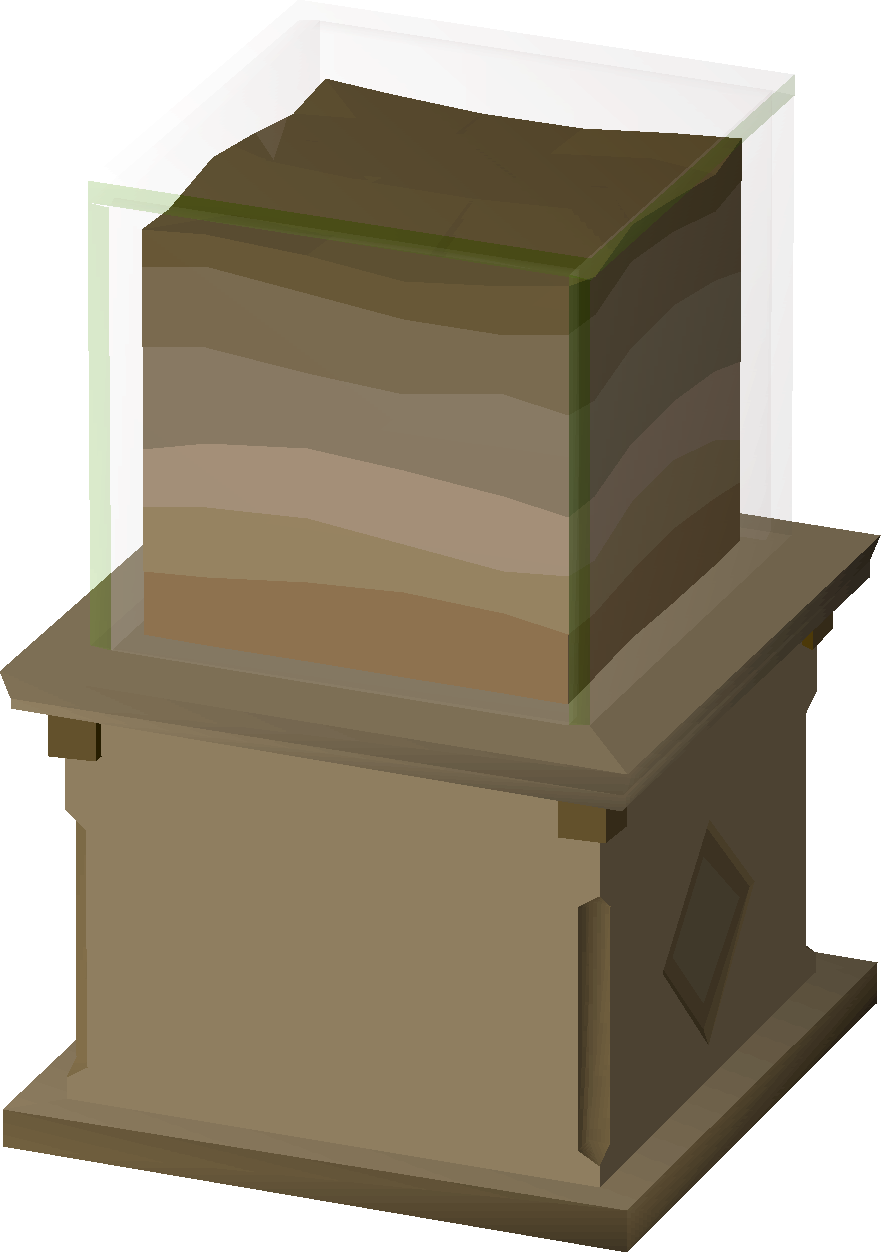
| Examine | A display of the different layers of soil. | ||||||||||||||||||
| Map | |||||||||||||||||||
| Advanced data | |||||||||||||||||||
| Object ID | 24621 | ||||||||||||||||||
| Link | MOID | ||||||||||||||||||
A display case that showcases the various layers (or horizons) of soil that archaeologists have to contend with can be found on the ground floor of the Varrock Museum. It is labelled as display number 27 of the museum's Dig Site exhibit.
The display case can be studied in order to learn more about the subject matter that it portrays.
Transcript
Display number 27
The Layers of Archaeology
Soil Layers
O horizon - The top layer of soil is made up mostly of leaves and decomposed organic matter.
A horizon (topsoil) - Plants grow in this dark-coloured layer, which is made up of decomposed organic matter mixed with mineral particles.
E horizon - This eluviation (leaching) layer has a light colour and is made up of sand and silt. We often find significant archaeological artefacts in this layer.
B horizon (subsoil) - Contains clay and mineral deposits that it receives from layers above, when water drips through.
C horizon - Regolith consists of slightly broken up bedrock. Plant roots do not penetrate into this layer.
R horizon - The bedrock layer that is beneath all the other layers.Gallery
-
The display when studied.
.webp)
| Display cases |
| ||||||
|---|---|---|---|---|---|---|---|
| Displayable artefacts | |||||||
| Related | |||||||


